
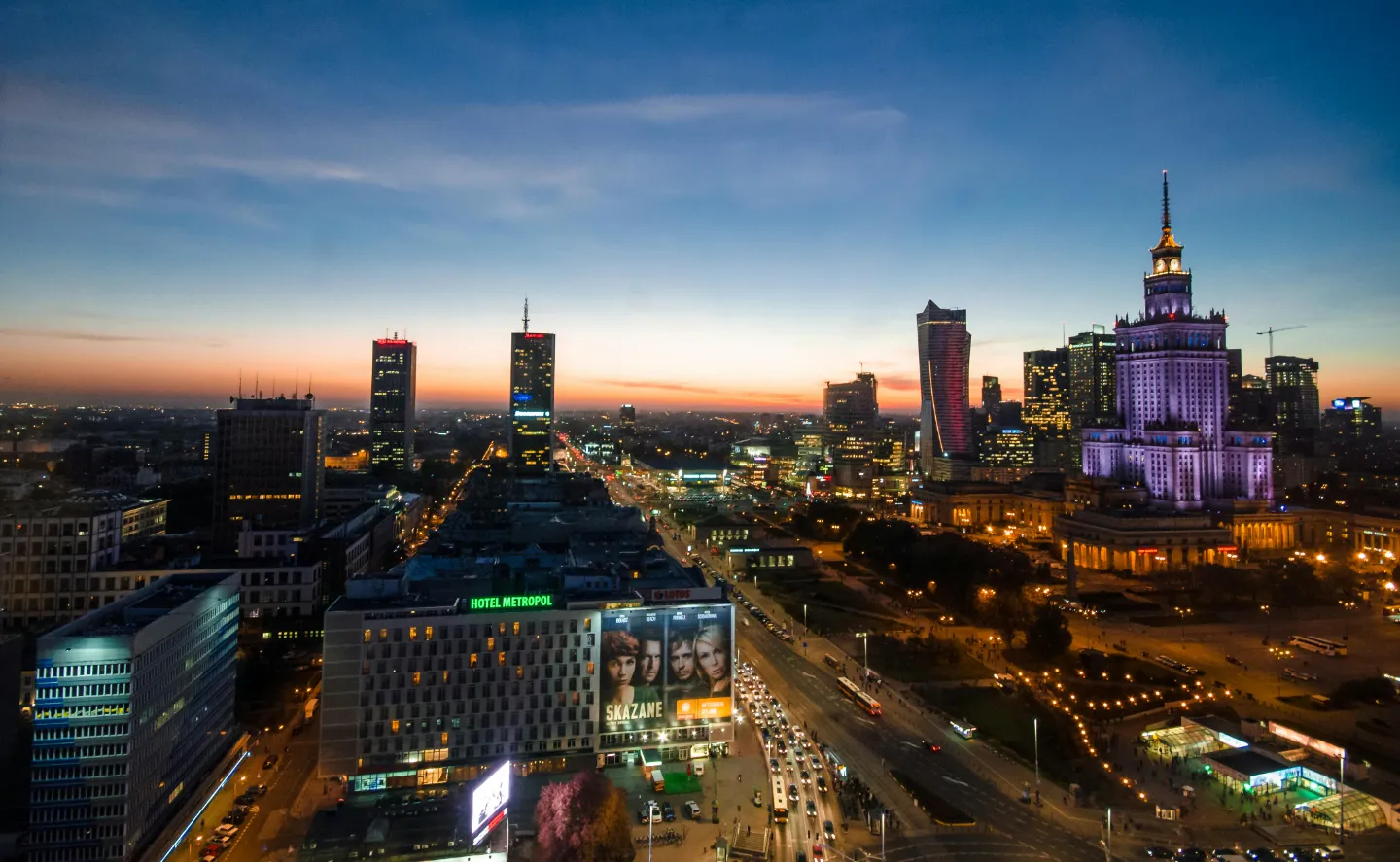
Warsaw is a city that rewards curiosity. At first glance, it can feel quietly modern, even understated. Look closer, and you begin to see layers of history, resilience, and creativity woven into its streets.
Almost completely destroyed during the Second World War, Warsaw has been rebuilt with extraordinary care and pride. Today, it blends restored medieval streets, elegant royal routes, and bold contemporary culture into one of Europe’s most interesting capitals.
This Warsaw travel guide is designed to help you understand the city properly. From Warsaw Old Town to its powerful museums, from food markets to concert halls, this is a place that stays with you long after you leave. If you are planning a Warsaw city break or a longer Warsaw weekend trip, you will find more here than you expect.
How to Get to Warsaw
Warsaw is easy to reach from anywhere in Poland and well connected to the rest of Europe. Most travelers arrive at Warsaw Chopin Airport, which sits only around 20 minutes from the city center by train or taxi.
If you are travelling within Poland, long-distance trains connect Warsaw with Kraków, Gdańsk, Wrocław, and Poznań several times a day. Warszawa Centralna station is right in the heart of the city, making arrival simple and stress-free.
Once in the city, this Warsaw public transport guide is refreshingly straightforward. Trams, buses, and the metro are clean, reliable, and inexpensive. You can explore almost all major Warsaw attractions without ever needing a car.
Understanding Warsaw: A City of Two Souls
Warsaw feels like two cities living side by side. One is the carefully reconstructed historical capital, full of palaces, cobbled streets, and royal gardens. The other is a forward-looking European metropolis with creative districts, riverside cafés, and striking modern architecture.
This contrast is part of the city’s charm. You can spend the morning in a medieval square, the afternoon in a cutting-edge museum, and the evening in a former factory turned cultural space.
Warsaw Old Town Guide: The Heart Rebuilt from Memory
Warsaw Old Town is not just beautiful. It is a symbol of survival. After the war, it was rebuilt almost entirely from old paintings, drawings, and photographs, and today it is a UNESCO World Heritage Site.
Start at Castle Square, where the Royal Castle marks the entrance to the Old Town. Inside, you will find grand halls and royal apartments that tell the story of Poland’s kings and constitution.
Wander along Świętojańska Street towards the Old Town Market Square. The colorful townhouses, outdoor cafés, and small galleries give the area a gentle, welcoming atmosphere. Climb the city walls for views over the Vistula River, especially in the late afternoon light.
Nearby, the New Town feels quieter and more residential, with small churches and peaceful streets that are perfect for a slower walk.
Warsaw Sightseeing Along the Royal Route
The Royal Route links the Old Town with some of the city’s most elegant districts. It is one of the best ways to understand Warsaw’s historical layout and royal past.
Along the way, you will pass the Presidential Palace, the University of Warsaw, and several important churches. The route ends at Wilanów Palace, often called the “Polish Versailles,” surrounded by formal gardens and a calm, almost aristocratic atmosphere.
This stretch is ideal for unhurried Warsaw sightseeing, especially on a clear day when the city feels open and relaxed.
Warsaw Museums Guide: History Told with Honesty
Warsaw Uprising Museum
The Warsaw Uprising Museum is one of the most moving places in the city. It tells the story of the 1944 uprising against Nazi occupation, using immersive displays, personal stories, and original artifacts.
This is not a quick visit. Give yourself time to absorb what you see. It explains, better than anywhere else, why Warsaw’s past still feels so present.
Polin Museum, Warsaw
The Polin Museum Warsaw explores 1,000 years of Jewish life in Poland. It is beautifully designed, thoughtful, and deeply informative.
Rather than focusing only on tragedy, it shows the full richness of Jewish culture, everyday life, and contributions to Polish society before the war.
Other Important Museums
The National Museum offers a broad look at Polish art and European painting. The Fryderyk Chopin Museum is a must for music lovers, especially before attending a Chopin concert in Warsaw.
Chopin in Warsaw: Music That Belongs to the City
Frédéric Chopin was born near Warsaw, and his presence is felt everywhere. You will find benches that play his music, plaques marking important places in his life, and concerts throughout the year.
Attending a Chopin concert in Warsaw, often held in elegant halls or historic salons, is a simple but memorable way to connect with the city’s cultural soul.
Praga District Warsaw: The Creative East Bank
Cross the Vistula River and you reach Praga, a district that feels very different from the polished center. Many buildings here survived the war, giving the area a raw, authentic character.
Praga is known for independent galleries, small theaters, and alternative cafés. It is also the best area for a Warsaw street art tour, with murals and installations tucked into courtyards and along old factory walls.
This part of the city shows Warsaw’s creative energy and its willingness to reinvent itself without forgetting the past.
Exploring by Bike and on Foot
Warsaw is surprisingly green and flat, making it perfect for cycling. A Warsaw bike tour along the Vistula River or through Łazienki Park is one of the most pleasant ways to see the city.
Łazienki Park itself is a highlight. Its palace on the water, peacocks, and wide paths create a peaceful escape from urban life. In summer, free Chopin concerts are held here on Sunday afternoons.
Warsaw Food Guide: From Milk Bars to Modern Dining
Polish Food in Warsaw
Start with pierogi, Poland’s most famous dumplings. You will find them filled with potatoes and cheese, meat, mushrooms, or even sweet fruit. Many locals argue about where to find the best pierogi in Warsaw, but small, traditional restaurants usually do them best.
Other classics include żurek (sour rye soup), bigos (hunter’s stew), and kotlet schabowy, a breaded pork cutlet that feels like a Polish answer to schnitzel.
Where to Eat in Warsaw
For traditional food, look for small, unfussy restaurants or well-run milk bars, which serve simple Polish dishes at very reasonable prices.
For something more contemporary, areas around Nowy Świat and Powiśle offer many excellent choices. If you are searching for the best restaurants in Warsaw, you will find a growing number that combine local ingredients with modern European cooking.
Things to Do in Tórshavn
- Explore Warsaw's Old Town and the Royal Castle
- Visit the Warsaw Uprising Museum and Polin Museum Warsaw
- Walk or cycle along the Vistula River on a Warsaw bike tour
- Attend a Chopin concert in Warsaw
- Discover the Praga district and take a Warsaw street art tour
- Relax in Łazienki Park and its gardens
- Try traditional dishes and find the best pierogi in Warsaw
- Enjoy the city during Warsaw Christmas markets or New Year celebrations
Where to Stay in Vilnius
Choosing where to stay in Warsaw can shape your whole experience of the city, so it is worth thinking carefully about both location and budget. For first-time visitors, Warsaw hotels near Old Town or along the Royal Route are usually the best choice, as you can walk to many of the main sights and enjoy the historic atmosphere in the evenings without needing public transport.
If you are looking for something more refined, luxury hotels in Warsaw are often found in beautifully restored buildings and offer spacious rooms, high standards of service, and excellent locations close to the city’s most important attractions. These hotels are ideal if you want a more comfortable and relaxed base for your Warsaw city break.
Travellers on a tighter budget will also find plenty of good options. Areas like Śródmieście and the Praga district have many cheap hotels in Warsaw and well-run hostels, all well connected by public transport. Overall, the best hotels in Warsaw tend to offer very good value for money compared to many other European capitals, whatever style of stay you prefer.
Tips or Practical Advice
- Warsaw is safe and easy to navigate, but a few small tips help.
- Wear comfortable shoes, as you will do a lot of walking, especially in the Old Town and parks. Credit cards are widely accepted, but it is still useful to carry some cash for small cafés or markets.
- English is commonly spoken in hotels, museums, and restaurants. Learning a few Polish words is always appreciated, even if not necessary.
Frequently Asked Questions (FAQs)
Q: Is Warsaw worth visiting for a weekend trip?
Yes, a Warsaw weekend trip is perfect for seeing the main sights, museums, and Old Town, with time for good food and relaxed walks.Q: How many days do I need for a proper Warsaw itinerary?
Three to four days is ideal to explore the main Warsaw attractions without rushing.Q: Is Warsaw expensive compared to other European capitals?
No, Warsaw is generally more affordable, especially for food, transport, and accommodation.Q: Is Warsaw safe for solo travelers?
Yes, Warsaw is considered very safe, including in the evenings in central areas.Q: Where is the best area to stay in Warsaw?
Around the Old Town, or Śródmieście, is most convenient for first-time visitors.
Yes, a Warsaw weekend trip is perfect for seeing the main sights, museums, and Old Town, with time for good food and relaxed walks.
Three to four days is ideal to explore the main Warsaw attractions without rushing.
No, Warsaw is generally more affordable, especially for food, transport, and accommodation.
Yes, Warsaw is considered very safe, including in the evenings in central areas.
Around the Old Town, or Śródmieście, is most convenient for first-time visitors.
Q: Do I need a car in Warsaw?
No, the public transport system is excellent and covers the whole city.
No, the public transport system is excellent and covers the whole city.
Conclusion
Warsaw is not a city that shows off. It reveals itself slowly, through stories, streets, music, and food. The more time you spend here, the more meaningful it becomes.
Whether you come for history, culture, or simply to understand a different side of Europe, your decision to visit Warsaw, Poland, will be rewarded with depth and warmth.
If you enjoy discovering thoughtful destinations like this, you can find more carefully chosen places on The Peace Destinations, where travel is about connection, not just movement.
Warsaw is not a city that shows off. It reveals itself slowly, through stories, streets, music, and food. The more time you spend here, the more meaningful it becomes.
Whether you come for history, culture, or simply to understand a different side of Europe, your decision to visit Warsaw, Poland, will be rewarded with depth and warmth.
If you enjoy discovering thoughtful destinations like this, you can find more carefully chosen places on The Peace Destinations, where travel is about connection, not just movement.
Want to explore?
Explore the world with our highly expert guides and affordable tour packages. Book your next trip with us today or Get a quote for your next trip!

 Trustpilot