
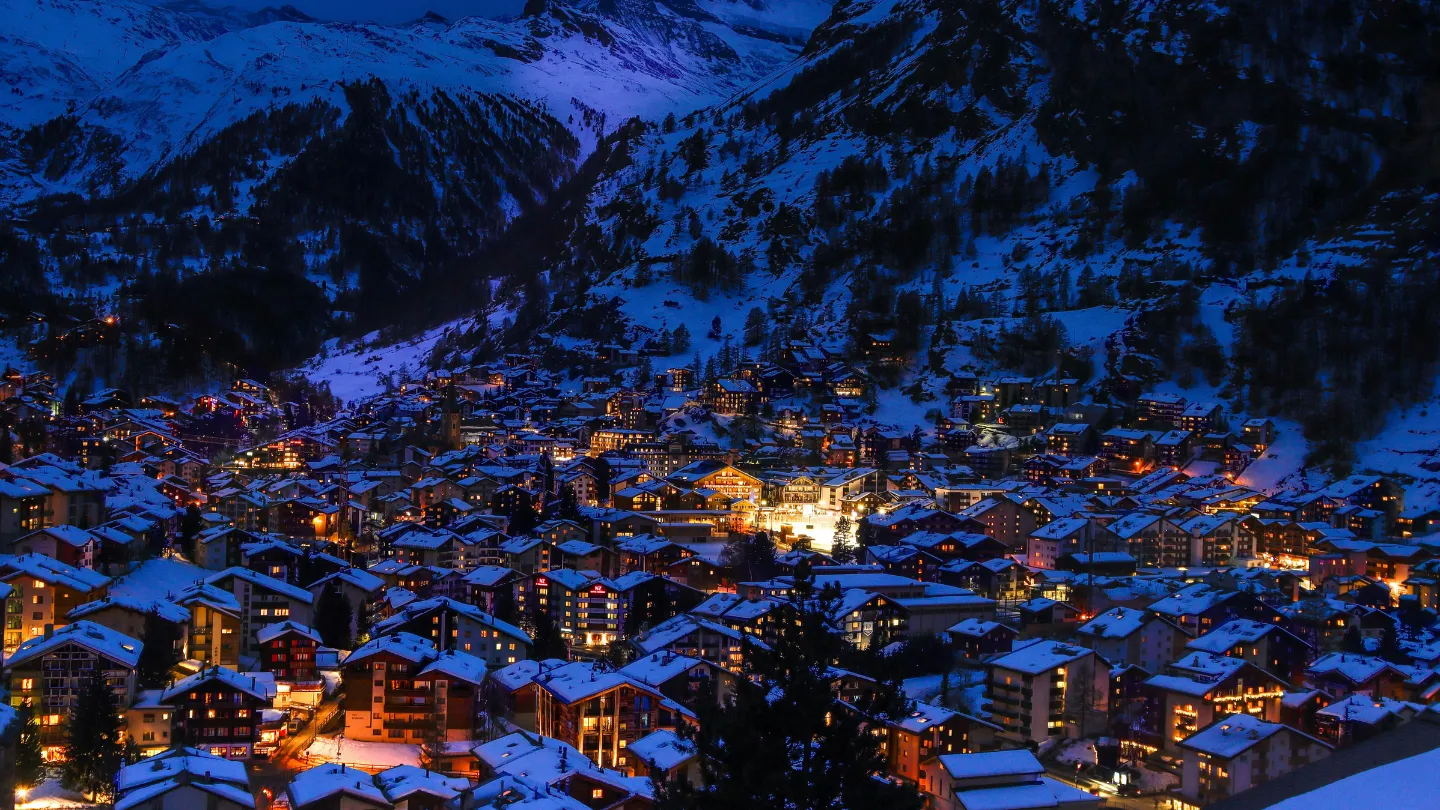
The Swiss Alps define Switzerland travel. They stretch across the southern half of the country, forming a dramatic landscape of sharp peaks, deep valleys, glacial rivers and storybook villages. Snow-dusted summits sit above Swiss pine forests, while quiet lowland valleys open into flower-filled meadows each summer.
From the iconic Matterhorn rising above Zermatt to the elegant resorts of St. Moritz and Gstaad, the Swiss Alps offer far more than postcard scenery. This is a region where Swiss glaciers shape the land, where panoramic train journeys thread through mountain tunnels, and where local traditions are still part of daily life.
If you are planning a tailor-made Switzerland trip, understanding the character of the Swiss Alps will help you build thoughtful Swiss Alps itineraries that balance scenery, culture and adventure.
How to Get to the Swiss Alps
Reaching the Swiss Alps within Switzerland is part of the experience. The rail network is remarkably efficient, linking major cities such as Zurich and Geneva directly to Alpine resorts. A panoramic train ride in Switzerland often includes Swiss stone-arched bridges, deep Swiss mountain tunnels and breathtaking valley views.
Travelling from the Lake Geneva region into the mountains gradually reveals Swiss foothills hiking paths and terraced Swiss lakeside vineyards before the terrain becomes steeper and more dramatic. In the south, near the Italian border Alps, the architecture and cuisine subtly shift, blending Swiss precision with Mediterranean warmth
Mountain railways such as the Gornergrat Railway in Zermatt or the line to Jungfraujoch Top of Europe make high-altitude landscapes accessible without technical climbing. These journeys are not just transport, but highlights of Switzerland travel in their own right.
The Landscapes of the Swiss Alps
Iconic Peaks and Glaciers
The Matterhorn is perhaps the most recognisable mountain in the world. Rising above Zermatt, its near-perfect pyramid shape dominates the skyline and attracts mountaineers from across the globe. Even if you do not climb it, viewing it at sunrise or sunset is unforgettable.
From Zermatt, the Gornergrat railway climbs to a ridge overlooking a vast panorama of Swiss glaciers. The scale is striking: rivers of ice stretching between jagged summits, shifting subtly with the seasons.
Further north, Jungfraujoch Top of Europe offers one of the highest railway stations on the continent. Here, snow and ice persist year-round, and visitors can step onto viewing platforms overlooking the Aletsch Glacier, the largest in the Alps.
Valleys, Forests and Alpine Flora
Beyond the famous peaks lie gentler landscapes. Swiss lowland valleys are dotted with wooden chalets, grazing cattle and small chapels. In early summer, Swiss mountain flowers bloom in bright clusters across meadows, contrasting with the dark green of Swiss pine forests.
These areas are ideal for Swiss summer activities such as walking, cycling and lake swimming. Swiss foothills hiking routes suit those who prefer steady paths rather than steep climbs, offering open views without extreme altitude.
The variety of terrain means the Swiss Alps are not only about dramatic summits but also about peaceful landscapes where time feels slower.
Alpine Resorts and Mountain Towns
Zermatt
Zermatt is car-free, which gives it a quiet, almost nostalgic atmosphere. Electric taxis move along narrow streets, and traditional wooden buildings sit beneath the Matterhorn. It is a centre for Swiss winter sports, yet in summer it transforms into a base for hiking and glacier excursions.
St. Moritz
St. Moritz combines Alpine scenery with elegance. Known for hosting international winter events, it has long been associated with refined Swiss Alpine resorts. In warmer months, lakeside walks and sailing complement mountain hikes.
Gstaad
Gstaad has a discreet charm. Wooden chalets blend into the valley landscape, and the pace is relaxed. It is popular for both skiing and summer walking, as well as for visitors seeking a traditional Swiss mountain spa experience in tranquil surroundings.
Each resort offers a distinct personality, allowing a Switzerland travel specialist to design Swiss Alps itineraries that reflect different interests and budgets.
Food and Alpine Culture
Food in the Swiss Alps is hearty and rooted in tradition. Melted Swiss cheese dishes such as fondue and raclette are staples after a day outdoors. Many Alpine dairies still produce cheese using age-old methods.
Swiss chocolate is widely available, but tasting it in a mountain village café with views of snow peaks adds something special. In areas closer to the Italian border Alps, menus often feature lighter Mediterranean influences alongside classic Swiss dishes.
In the Lake Geneva region and certain Alpine valleys, Swiss lakeside vineyards produce crisp white wines that pair beautifully with local cheese. Sampling regional food is an essential part of understanding Alpine culture.
Winter and Summer in the Swiss Alps
Swiss Winter Sports
From December to March, the Swiss Alps become a playground for skiing, snowboarding and cross-country trails. Resorts like Zermatt and St. Moritz are internationally known for Swiss winter sports, offering well-maintained pistes and reliable snow at higher elevations.
Even non-skiers can enjoy winter walks, sledging and cosy evenings in mountain lodges.
Swiss Summer Activities
Summer reveals a different side of the Alps. Trails open through Swiss pine forests, cable cars carry walkers to panoramic viewpoints, and lakes reflect bright blue skies. Hiking, mountain biking and scenic train journeys dominate this season.
The best period depends on your interests. Winter suits snow lovers, while late spring to early autumn is ideal for hiking and exploring valleys.
Where to Stay in the Swiss Alps
Accommodation ranges from grand hotels in St. Moritz to smaller family-run chalets in quieter valleys.
Luxury travellers often choose high-end Swiss Alpine resorts with spa facilities and panoramic terraces. A Swiss mountain spa overlooking snowy peaks is a memorable way to unwind.
Mid-range options include traditional hotels in Zermatt and Gstaad, offering comfort and easy access to lifts and hiking trails. Budget travellers can find guesthouses and mountain lodges in less central villages, particularly in broader valleys.
When planning a tailor-made Switzerland trip, working with a Switzerland travel specialist helps match accommodation style to your chosen Swiss Alps itinerary.
Things to Do in the Swiss Alps
- Ride the Gornergrat railway for Matterhorn views
- Visit Jungfraujoch Top of Europe
- Hike through Swiss foothills and pine forests
- Explore Swiss winter sports in Zermatt or St. Moritz
- Relax in a Swiss mountain spa
- Enjoy a panoramic train ride across mountain bridges and tunnels
- Sample Swiss cheese and Swiss chocolate in Alpine villages
- Walk through valleys near the Italian border Alps
Practical Tips for Visiting the Swiss Alps
- Pack layers, even in summer. Weather changes quickly at altitude.
- Wear sturdy footwear for hiking, especially on rocky trails.
- Check train timetables in advance if planning a panoramic train ride in Switzerland.
- Stay hydrated and move slowly when visiting high-altitude spots like Jungfraujoch Top of Europe.
- Respect marked paths near Swiss glaciers, as conditions can shift unexpectedly.
Frequently Asked Questions (FAQs)
Q: When is the best time to visit the Swiss Alps?
Winter is ideal for skiing, while June to September suits hiking and Swiss summer activities.Q: Are the Swiss Alps suitable for non-skiers?
Yes. Scenic trains, spas, hiking trails and mountain viewpoints offer plenty beyond skiing.Q: Is Jungfraujoch worth visiting?
Yes, especially for first-time visitors wanting to experience high Alpine glaciers without technical climbing.Q: Can beginners hike in the Swiss Alps?
Absolutely. Many Swiss foothills hiking routes are well-marked and manageable for moderate fitness levels.Q: How expensive are the Swiss Alps?
Switzerland travel can be costly, but options range from luxury resorts to modest guesthouses in quieter valleys.
Winter is ideal for skiing, while June to September suits hiking and Swiss summer activities.
Yes. Scenic trains, spas, hiking trails and mountain viewpoints offer plenty beyond skiing.
Yes, especially for first-time visitors wanting to experience high Alpine glaciers without technical climbing.
Absolutely. Many Swiss foothills hiking routes are well-marked and manageable for moderate fitness levels.
Switzerland travel can be costly, but options range from luxury resorts to modest guesthouses in quieter valleys.
Q: Do I need a car in the Swiss Alps?
Not usually. The train system is efficient, and many resorts like Zermatt are car-free.
Not usually. The train system is efficient, and many resorts like Zermatt are car-free.
Conclusion
The Swiss Alps are more than dramatic mountains. They are living landscapes shaped by glaciers, traditions and careful stewardship. Whether you are watching sunrise on the Matterhorn, travelling across stone-arched bridges by train, or tasting local cheese in a quiet valley, the experience feels deeply connected to nature.
If you are considering Switzerland travel, take time to design thoughtful Swiss Alps itineraries that balance adventure and rest. You can find more carefully crafted guides and ideas for your next journey on The Peace Destinations website.
The Swiss Alps are more than dramatic mountains. They are living landscapes shaped by glaciers, traditions and careful stewardship. Whether you are watching sunrise on the Matterhorn, travelling across stone-arched bridges by train, or tasting local cheese in a quiet valley, the experience feels deeply connected to nature.
If you are considering Switzerland travel, take time to design thoughtful Swiss Alps itineraries that balance adventure and rest. You can find more carefully crafted guides and ideas for your next journey on The Peace Destinations website.
Want to explore?
Explore the world with our highly expert guides and affordable tour packages. Book your next trip with us today or Get a quote for your next trip!
 Trustpilot