
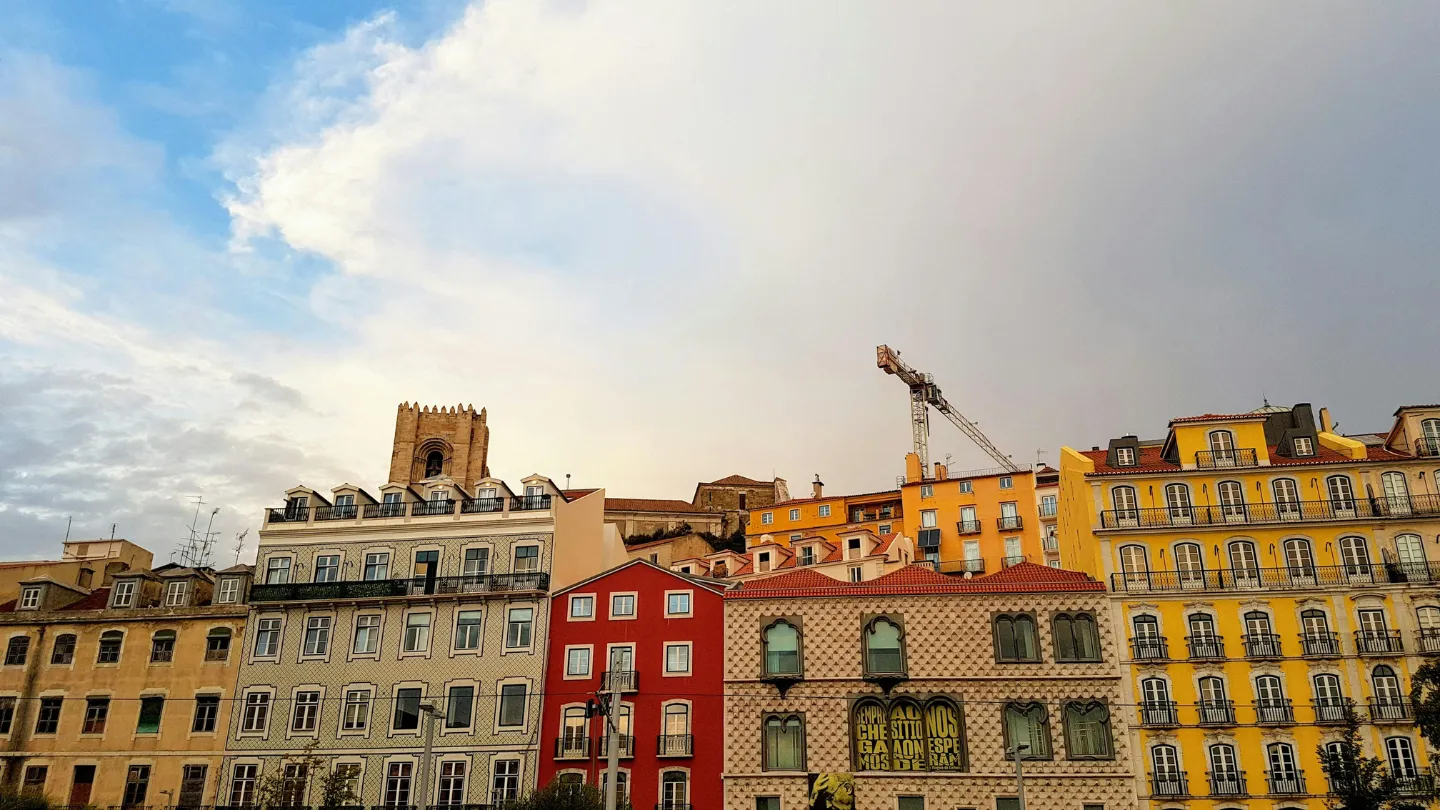
Lisbon, Portugal is one of Europe’s most distinctive capital cities, shaped by steep hills, patterned pavements, pastel-coloured streets and a long maritime history. It is a place where tradition sits beside modern creative spaces, and where cafés, bookshops and viewpoints give the city its relaxed rhythm. Travellers from Europe and North America often begin their Portugal journey here, drawn by the mix of warm weather, heritage and the soft charm that makes Lisbon feel both historic and lived-in.
The city has recovered and rebuilt itself many times, most notably after the earthquake of 1755, and this resilience still shapes its character. With neighbourhoods that vary from calm riverside walks to lively markets and artistic quarters, Lisbon offers a city break that balances culture, food, architecture and movement through its steep streets.
How to Get to Lisbon
Lisbon is easy to access from most major European hubs, and its airport sits close to the city centre. Travellers can reach the heart of Lisbon using the metro, taxis or airport buses, each offering a short ride into the central districts.
Once in the city, its compact size makes it straightforward to move between neighbourhoods. Rossio Station connects Lisbon to places such as Sintra, while fast trains link to Porto. Public transport includes trams, funiculars, ferries and a metro system, giving visitors an easy way to explore without needing a car.
Deep Exploration of Lisbon
1. The Shape of the City: Hills, Streets and History
Lisbon’s steep hills form its most recognisable feature. They shape the layout of streets, viewpoints and everyday life. Strolling through authentic Lisbon involves climbing narrow stairways, passing small pastelarias and crossing patterned pavements that glimmer after rain. The city’s grid layout in the Baixa district is a response to the earthquake of 1755, making today’s straight streets stand out from the winding alleys of older neighbourhoods.
Walking through Lisbon often reveals traces of its past, from Manueline architecture inspired by Portugal’s Age of Discoveries to buildings influenced by the era of the Carnation Revolution.
2. Belém and the Age of Discoveries
Belém is one of Lisbon’s most symbolic areas, connected to Portugal’s maritime history. The Jerónimos Monastery and Belém Tower reflect the era of Vasco da Gama and explorers who departed from the nearby harbour. The Monument of the Discoveries lines the riverside promenade, offering a sense of Lisbon’s former global reach.
Belém is also home to the original pastelaria famed for pastéis de nata. Many travellers stop here before visiting museums and river paths. Queues at Lisbon attractions in this district can be long, so early morning or late afternoon timings help avoid crowds.
3. Creative Lisbon: LX Factory and Street Art
LX Factory is one of the city’s most expressive creative hubs. Set beneath the 25 de Abril Bridge, it hosts studios, cafés, galleries and bookshops. Livraria Ler Devagar, one of Lisbon’s most photographed bookshops, draws visitors with its tall shelves and the quiet presence of second-hand books.
Street art is another part of Lisbon’s modern identity, with murals and sculptures appearing across housing blocks, staircases and tram routes. These artworks contribute to the visual texture of Lisbon and provide a contrast to its older architecture.
4. Historic Squares and Landmark Views
Praça do Comércio sits at the edge of the river, framed by the Rua Augusta Arch. This wide square was rebuilt after the earthquake, and today acts as a central point for travellers exploring the Baixa district.
The Santa Justa Lift connects lower and higher streets, giving travellers a view of the tiled rooftops and Lisbon hills. Tram 28 remains one of the city’s most iconic routes, passing through neighbourhoods that reveal the layers of Lisbon’s story.
5. Les Invalides and Napoleon’s Tomb
The complex of Les Invalides holds centuries of French military history. The most striking part is the gilded dome above Napoleon’s Tomb. Inside, the circular hall draws your attention to the sarcophagus at its centre. The surrounding buildings contain exhibitions on French campaigns and military heritage.
6. Getting Around Lisbon
Getting around Lisbon requires a mix of walking and public transport. The public transport pass is helpful for travellers staying multiple days, as it covers metro lines, trams, funiculars and some ferries.
Funiculars help with steep climbs, while ferries crossing the river offer a different angle of the cityscape. The journey itself often becomes part of the experience, especially when travelling through the older parts of town where pavements and slopes shape the rhythm of movement.
7. Food Culture and Everyday Eating
Lisbon’s culinary scene is built around cafés, bakeries, simple seafood dishes and restaurants that blend tradition with modern approaches. Pastéis de nata form a central part of daily life, available in countless bakeries though many still seek the original shop in Belém.
Small tascas offer grilled fish, soups and plates that reflect local tastes. City markets and riverside restaurants present more contemporary experiences, while cafés around neighbourhood squares invite slow moments between exploring Lisbon attractions.
Things to Do in Lisbon
- Explore the riverside paths of Belém.
- Visit Jerónimos Monastery and Belém Tower.
- Ride tram 28 through the older districts.
- Wander LX Factory’s shops, cafés and art spaces.
- View Lisbon from Santa Justa Lift.
- Visit Praça do Comércio and Rua Augusta Arch.
- Take a ferry across Lisbon harbour for different city views.
- Day trip to Sintra or Cascais using Rossio Station connections.
- Shop at the Benfica store for football fans.
Where to Stay in Lisbon
Accommodation in Lisbon offers a wide range of choices, from polished boutique hotels to creative hostels and well-known international names. Luxury travellers often stay near Avenida da Liberdade, an area known for comfort and easy access to central Lisbon. Those looking for mid-range options tend to favour the streets around Rossio Station, which provide a practical base with convenient train links for day trips. Budget travellers find good value in places such as LX Hostel, where communal spaces and a relaxed atmosphere reflect the city’s creative side.
Tips or Practical Advice
- Lisbon’s hills require comfortable walking shoes.
- Queues at major attractions like Belém Tower and Jerónimos Monastery are common; plan early visits.
- Public transport is efficient; funiculars save considerable effort on steep climbs.
- Book restaurants during weekends, especially in popular neighbourhoods.
- Keep an eye on trams in narrow streets, where pavements can be tight.
- Spring and early summer offer pleasant weather; New Years and December are also popular periods.
Frequently Asked Questions (FAQs)
Q: Is Lisbon a good destination for a city break?
Yes, its compact size, viewpoints, historic sites and food culture make Lisbon ideal for a short or medium-length city break.Q: What is the best way to get around Lisbon?
A mix of walking, trams, funiculars and the metro. A public transport pass is cost-effective for multiple days.Q: Are the hills difficult for first-time visitors?
Some areas are steep, but funiculars and trams make moving around easier.Q: Is it worth visiting Belém?
Yes, Belém holds many of the city’s major cultural sites and is closely tied to Lisbon’s maritime history.Q: When is the best time to visit Lisbon?
Spring, early summer, October and the December–New Years period offer pleasant weather and lively events.
Yes, its compact size, viewpoints, historic sites and food culture make Lisbon ideal for a short or medium-length city break.
A mix of walking, trams, funiculars and the metro. A public transport pass is cost-effective for multiple days.
Some areas are steep, but funiculars and trams make moving around easier.
Yes, Belém holds many of the city’s major cultural sites and is closely tied to Lisbon’s maritime history.
Spring, early summer, October and the December–New Years period offer pleasant weather and lively events.
Q: Are queues long at major Lisbon attractions?
Yes, especially in Belém. Early mornings or late afternoons are best.Q: Is LX Factory suitable for families?
Yes, it has cafés, open spaces and bookshops that appeal to all ages.
Yes, especially in Belém. Early mornings or late afternoons are best.
Yes, it has cafés, open spaces and bookshops that appeal to all ages.
Conclusion
Lisbon, Portugal combines history, creativity and a relaxed daily rhythm that makes it one of Europe’s most rewarding cities to explore. Its hills, squares, riverside paths and artistic corners give travellers a wide range of experiences without overwhelming them. Whether you are drawn by architecture, food, or simple moments in neighbourhood cafés, Lisbon reveals its charm at a gentle pace. For more guides and hidden travel ideas, you can explore similar destinations on The Peace Destinations website.
Lisbon, Portugal combines history, creativity and a relaxed daily rhythm that makes it one of Europe’s most rewarding cities to explore. Its hills, squares, riverside paths and artistic corners give travellers a wide range of experiences without overwhelming them. Whether you are drawn by architecture, food, or simple moments in neighbourhood cafés, Lisbon reveals its charm at a gentle pace. For more guides and hidden travel ideas, you can explore similar destinations on The Peace Destinations website.
Want to explore?
Explore the world with our highly expert guides and affordable tour packages. Book your next trip with us today or Get a quote for your next trip!



 Trustpilot