
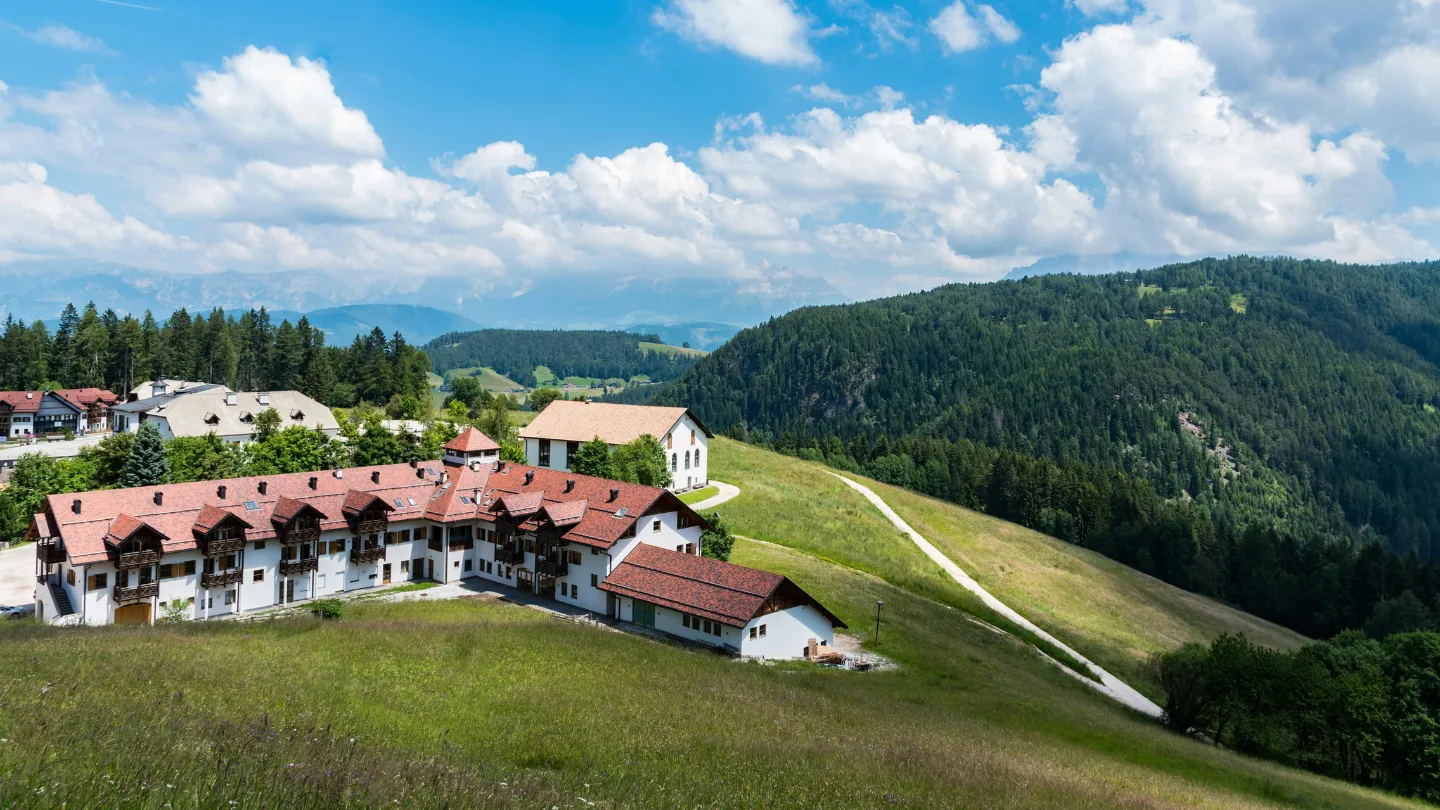
Assisi, Italy, sits high on the slopes of Mount Subasio in Umbria, Italy, often called the green heart of Italy. This mediaeval hilltop town, in the Province of Perugia, overlooks olive groves and the wide Umbrian countryside below. Stone houses glow pink in the evening light, and church bells echo across the valley.
Assisi is known around the world as the birthplace of St Francis of Assisi and St Clare of Assisi. For centuries, pilgrims have travelled here in search of reflection and faith. Yet beyond religious tourism in Italy, Assisi offers something broader: a deeply authentic Italian travel experience shaped by silence, history and landscape.
This Assisi travel guide explores the town’s spiritual heritage, its monasteries, walking routes and the practical details you need for a meaningful visit.
How to Get to Assisi
Understanding how to get to Assisi is straightforward. The town is well connected within Umbria's public transport networks.
Assisi train travel is convenient from major cities. Trains run regularly from Florence and Rome, usually with a change in Perugia, Italy, or Foligno, Italy. The station lies at the base of the hill, and local buses or taxis take you up into the historic centre.
Assisi by bus is also possible from Perugia and nearby towns. Travelling by train or bus allows you to enjoy views of the Umbrian countryside, rolling vineyards and distant mediaeval castles. Umbria is known for.
If you are exploring the hilltop towns of Italy, Assisi fits naturally into a wider journey through Umbria, Italy.
The Spiritual Heart of Assisi
Basilica di San Francesco Assisi
The most important site in Assisi, Italy, is the Basilica di San Francesco Assisi, also known as the Basilica of St Francis Assisi. This vast complex contains two churches built one above the other, decorated with extraordinary fresco cycles.
Inside lies the Crypt of St Francis, a quiet stone chamber where the saint is buried. Many visitors come on pilgrimage to Assisi specifically to pray here. Even if you are not religious, the atmosphere is deeply moving.
The basilica remains the spiritual centre of the Franciscan Order. Franciscan friars and nuns continue to live and work here, preserving the teachings of simplicity and humility that St Francis of Assisi championed.
Basilica di Santa Chiara Assisi
Across town stands the Basilica di Santa Chiara,
The best time to visit Assisi is spring or early autumn, when temperatures are mild and the Umbrian countryside is green.
Summer can be warm, especially during peak pilgrimage periods. Winter is quieter, offering a reflective atmosphere and fewer crowds.
Things to Do
- Visit Basilica di San Francesco, Assisi.
- Pray at the Crypt of St Francis
- Explore Basilica di Santa Chiara, Assisi.
- Walk through Piazza del Comune, Assisi.
- Take an Assisi walking tour
- Stay in a convent guest house. Assisi
- Hike on Mount Subasio
- Visit Santa Maria degli Angeli Assisi
- Explore Umbrian wineries
- Discover nearby medieval castles in the Umbria region
Tips or Practical Advice
- Dress modestly when visiting basilicas and monasteries. Shoulders and knees should be covered.
- Wear comfortable walking shoes, as streets are steep and paved in stone.
- Check service times if you wish to attend mass or sacred music Assisi events.
- Public transport connections in Umbria's public transport networks may be limited on Sundays.
Frequently Asked Questions (FAQs)
Q: Is Assisi worth visiting if you are not religious?
Yes. While central to religious tourism in Italy, Assisi also offers history, art and beautiful landscapes.Q: How long do you need in Assisi, Italy?
Two days allow time for basilicas, walking tours and a relaxed exploration of the town.Q: Can you stay in a monastery in Assisi?
Yes. There are several monastery stay Italy options and convent guest house Assisi choices available.Q: Is Assisi easy to reach by train?
Yes. Assisi by train is straightforward from Rome or Florence, usually with one change.Q: When is the best time for a pilgrimage to Assisi?
Spring and autumn offer comfortable weather and fewer crowds.
Yes. While central to religious tourism in Italy, Assisi also offers history, art and beautiful landscapes.
Two days allow time for basilicas, walking tours and a relaxed exploration of the town.
Yes. There are several monastery stay Italy options and convent guest house Assisi choices available.
Yes. Assisi by train is straightforward from Rome or Florence, usually with one change.
Spring and autumn offer comfortable weather and fewer crowds.
Q: Are there natural attractions near Assisi?
Yes. Mount Subasio and the surrounding Umbrian countryside provide scenic walking routes.
Yes. Mount Subasio and the surrounding Umbrian countryside provide scenic walking routes.
Conclusion
Assisi, Italy, is more than a mediaeval hilltop town. It is a place shaped by simplicity, faith and landscape. Whether you come on pilgrimage to Assisi or simply for an authentic Italian travel experience, the town leaves a lasting impression.
For more reflective destinations across Europe, you can discover thoughtful travel ideas on the Peace Destinations website.
Assisi, Italy, is more than a mediaeval hilltop town. It is a place shaped by simplicity, faith and landscape. Whether you come on pilgrimage to Assisi or simply for an authentic Italian travel experience, the town leaves a lasting impression.
For more reflective destinations across Europe, you can discover thoughtful travel ideas on the Peace Destinations website.
Want to explore?
Explore the world with our highly expert guides and affordable tour packages. Book your next trip with us today or Get a quote for your next trip!




 Trustpilot