
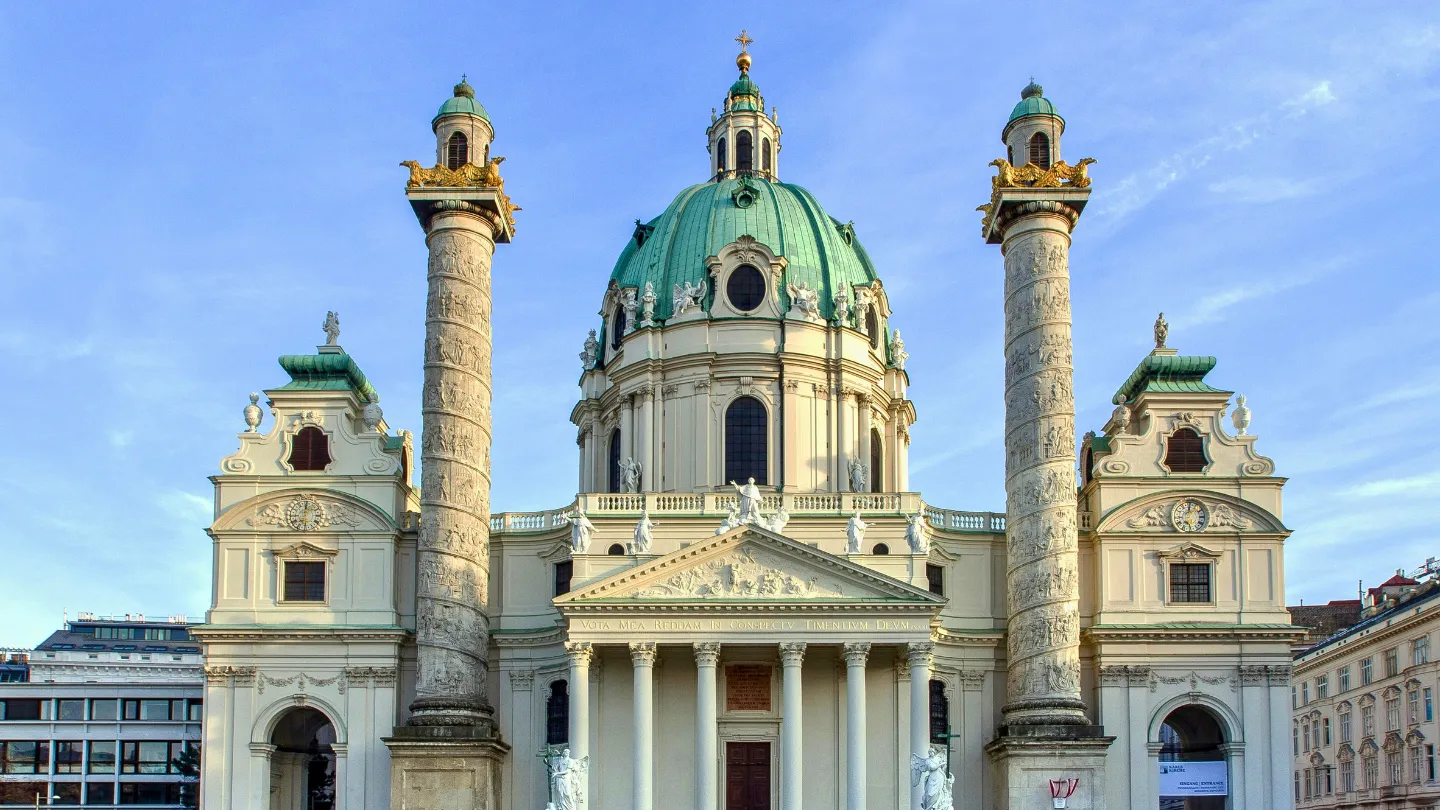
Vienna, the elegant capital of Austria, is a city that rewards slow exploration. Baroque palaces, grand museums, classical music halls and intimate coffee houses sit side by side, creating a place that feels both imperial and welcoming.
This Vienna travel guide takes you through the city’s character in depth. From a Vienna city centre walk through the Vienna Old Town to world-class art collections and traditional Viennese cafés, it focuses on what truly defines the Austrian capital. If you are planning Vienna sightseeing and want insight rather than a checklist, you are in the right place.
How to Get to Vienna
Vienna is well connected within Austria and across Europe. Most international travellers arrive via Vienna International Airport, around 20 minutes from the centre by City Airport Train or railjet service.
If you are already in Austria, high-speed trains link Vienna with Salzburg, Graz and Innsbruck. Arriving by train is particularly pleasant as you step straight into the historic atmosphere near the Ringstrasse.
Once in the city, public transport is efficient and easy to use. Trams circle the historic core, underground lines connect outer districts, and much of the Vienna Old Town is best explored on foot. A Vienna walking tour, whether guided or self-guided, is often the perfect introduction.
The Historic Heart: Vienna Old Town and the Ringstrasse
A Vienna city centre walk reveals why the historic core is among the top places to visit in viena. Begin at the impressive Staatsoper Wien and head towards Michaelerplatz, where the curved façade of the Hofburg Palace frames the square.
The Hofburg Palace served as the centre of Habsburg power for centuries. Its courtyards and grand entrances reflect the scale of imperial ambition. Nearby streets lead you towards St. Stephen's Cathedral, whose Gothic tower rises above the rooftops.
Climb the South Tower for sweeping views, or simply wander through narrow lanes lined with Baroque façades. A Vienna walking tour here feels less like sightseeing and more like stepping through layers of European history.
Imperial Highlights: Vienna Palace Tours
Schönbrunn Palace
Schönbrunn Palace is one of the most important Vienna history attractions. The former summer residence of the Habsburgs, it offers richly decorated state rooms and insight into imperial life.
The landscaped gardens stretch behind the palace in perfect symmetry. From the Gloriette viewpoint, you can look down over the formal lawns and fountains. Within the grounds, Schönbrunn Zoo, the oldest zoo in the world, adds another reason to visit.
Belvedere Palace
The Belvedere Palace complex consists of two magnificent Baroque buildings separated by formal gardens. Inside the Upper Belvedere Vienna, you will find Klimt The Kiss, Austria’s most celebrated painting.
Standing before the gold tones of The Kiss is one of the defining Vienna cultural experiences. The palace itself, with its terraces and reflecting pools, is equally striking.
Vienna Art Museums and Cultural Depth
Kunsthistorisches Museum and the Kunstkammer
The Kunsthistorisches Museum Vienna houses works by Old Masters including Bruegel and Rembrandt. Yet the true wonder lies in the Kunstkammer Vienna, a collection of rare and intricate objects gathered by the Habsburgs.
Here you will find finely carved ivories, gold vessels and mechanical curiosities. It is often considered one of the best museums in Vienna for those who appreciate craftsmanship and history combined.
MAK Museum and Albertina Museum
The MAK Museum Vienna focuses on applied arts and design. Its exhibitions explore furniture, architecture and contemporary creativity in thoughtful ways.
The Albertina Museum is known for prestigious temporary exhibitions and an extensive graphic arts collection. It remains a central part of Vienna sightseeing for art lovers.
Hundertwasser and Modern Expression
Vienna’s creative spirit extends beyond imperial grandeur. The colourful Hundertwasserhaus stands out with irregular windows and organic forms.
For a deeper understanding, visit Kunst Haus Wien, often described as the Hundertwasser Museum Vienna. Its exhibitions showcase the artist’s environmental ideals and bold aesthetic.
Even the Spittelau incinerator was redesigned by Hundertwasser, transforming a practical building into a visual landmark.
Coffee House Culture
A traditional Viennese coffee house is central to daily life. Order a Melange and settle in with a newspaper or book.
Café Central Vienna and Café Sacher Vienna are two of the most famous addresses. Their chandeliers, marble tables and formal service reflect a long-standing café tradition.
Vienna coffee and cake is not rushed. In traditional Vienna cafés, time slows, conversation lingers and the atmosphere feels almost theatrical.
History and Memory
At Mozarthaus Vienna, often referred to as the Mozart apartment Vienna, you can walk through rooms where the composer once lived. Exhibits explore his life in the city and his musical achievements.
The Military History Museum Vienna, officially the Heeresgeschichtliches Museum, provides insight into Austria’s military past. Among its most striking exhibits is the Franz Ferdinand car Vienna, connected to the assassination that triggered the First World War.
On Heldenplatz Vienna, near the Neue Burg Vienna wing of the Hofburg complex, the architecture surrounding you remains largely unchanged since the late nineteenth century. It is a powerful reminder of the city’s imperial past.
Parks and Seasonal Atmosphere
The Volksgarten Rose Garden bursts into colour during late spring and summer. Rows of carefully cultivated roses bloom against a backdrop of neoclassical architecture.
In winter, Christmas in Vienna brings a different mood. Vienna Christmas markets fill historic squares with lights, wooden stalls and the scent of roasted chestnuts. The setting in front of Upper Belvedere Vienna is especially atmospheric after dark.
Things to Do in Vienna
- Take a Vienna walking tour through the historic centre
- Explore Schönbrunn Palace and its gardens
- Visit the Kunstkammer Vienna
- See Klimt The Kiss at the Upper Belvedere Vienna
- Enjoy coffee and cake in a traditional Viennese coffee house
- Experience a Vienna concert experience
- Discover the MAK Museum Vienna and Albertina Museum
- Relax in the Volksgarten Rose Garden
Where to Stay in Vienna
Luxury travellers may choose grand hotels along the Ringstrasse or near the opera house.
Mid-range boutique hotels in the Innere Stadt provide easy access to museums and cafés.
Budget accommodation is available in surrounding districts, all connected by efficient public transport.
Tips or Practical Advice
- Wear comfortable shoes for cobbled streets and palace grounds.
- Book Schönbrunn Palace tours and concert tickets in advance during peak seasons.
- Allocate enough time for major museums, as collections are extensive.
- Use public transport passes for cost-effective travel.
Frequently Asked Questions (FAQs)
Q: What is the best time to visit Vienna?
Spring and early autumn offer mild weather. December is ideal for Vienna Christmas markets.Q: How many days should I spend in Vienna?
Three to four days allow time for palaces, museums and café culture.Q: Are Vienna palace tours suitable for children?
Yes, particularly Schönbrunn Palace and Schönbrunn Zoo, which are family-friendly.Q: Is Vienna safe for solo travellers?
Vienna is widely regarded as one of Europe’s safest capitals.Q: Which are the best museums in Vienna?
The Kunsthistorisches Museum Vienna, Albertina Museum and MAK Museum Vienna are consistently highly rated.Q: What makes Vienna unique compared to other European cities?
Its blend of imperial architecture, classical music heritage, coffee house culture and carefully preserved historic atmosphere.
Spring and early autumn offer mild weather. December is ideal for Vienna Christmas markets.
Three to four days allow time for palaces, museums and café culture.
Yes, particularly Schönbrunn Palace and Schönbrunn Zoo, which are family-friendly.
Vienna is widely regarded as one of Europe’s safest capitals.
The Kunsthistorisches Museum Vienna, Albertina Museum and MAK Museum Vienna are consistently highly rated.
Its blend of imperial architecture, classical music heritage, coffee house culture and carefully preserved historic atmosphere.
Conclusion
Vienna is not a city that overwhelms with spectacle. Instead, it unfolds gradually through palace corridors, museum galleries and quiet café tables.
Whether you come for Vienna history attractions, world-renowned art or simple Vienna sightseeing, the city rewards patience and curiosity. With thoughtful planning and a willingness to slow down, Vienna reveals itself as one of Europe’s most refined and culturally rich capitals.
Vienna is not a city that overwhelms with spectacle. Instead, it unfolds gradually through palace corridors, museum galleries and quiet café tables.
Whether you come for Vienna history attractions, world-renowned art or simple Vienna sightseeing, the city rewards patience and curiosity. With thoughtful planning and a willingness to slow down, Vienna reveals itself as one of Europe’s most refined and culturally rich capitals.
Want to explore?
Explore the world with our highly expert guides and affordable tour packages. Book your next trip with us today or Get a quote for your next trip!


 Trustpilot