
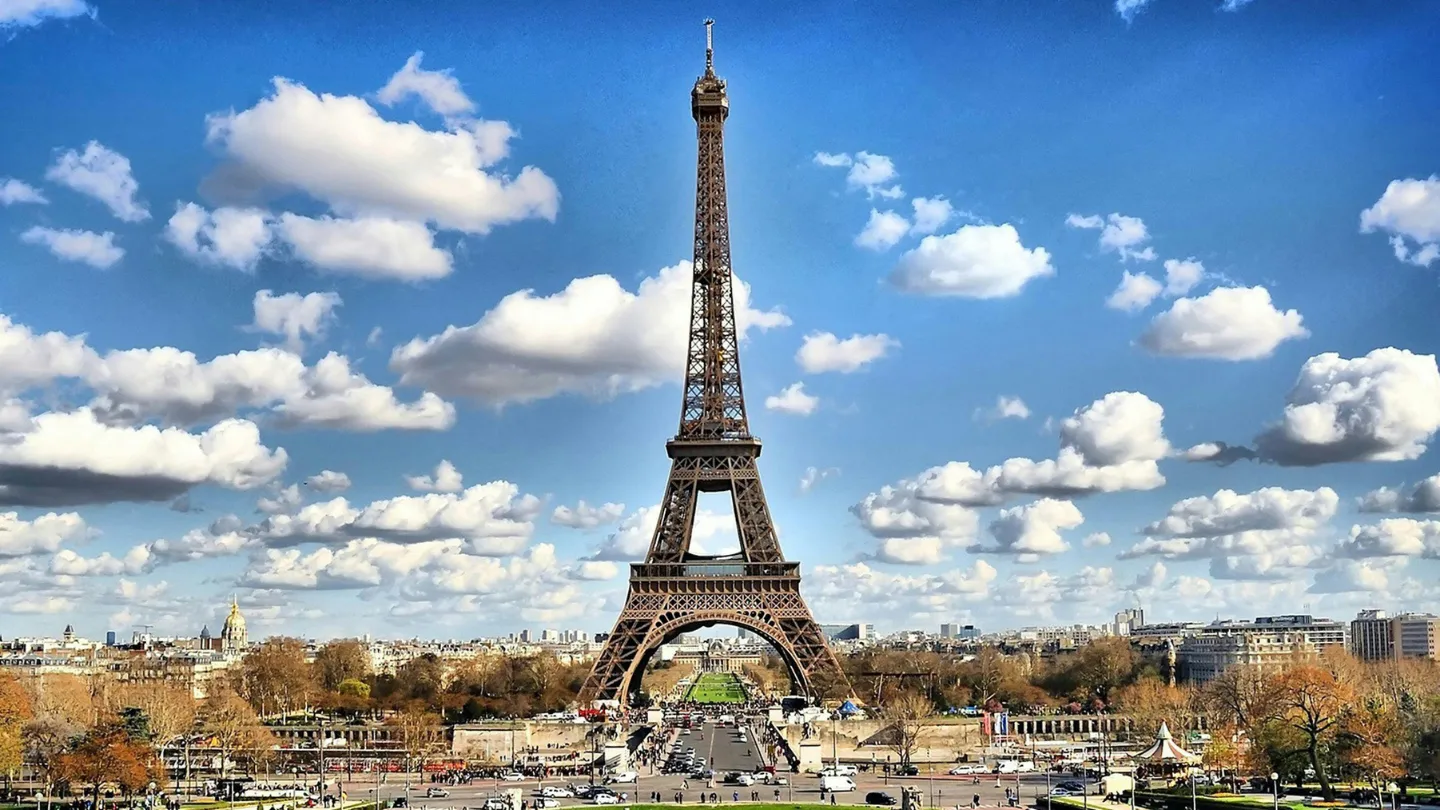
Paris has a way of drawing you in long before you arrive. The city’s skyline, shaped by the Eiffel Tower and the Arc de Triomphe, is only the beginning. Paris offers layers of history, art, architecture, and neighbourhoods that feel lived-in and timeless. Each area along the River Seine carries its own identity, from the stately sweep of the Champs-Élysées to the quiet corners of Saint-Germain-des-Prés.
This guide explores Paris through its defining places, cultural spaces, and historic districts. The focus is on what the city truly offers: its museums, grand boulevards, bridges, city islands, hilltops, and the everyday pulse of life in its cafés and gardens. Whether you're visiting for the first time or returning to see Paris with fresh eyes, this guide gives you the depth, context, and practical detail to explore with confidence.
How to Get to Paris
Paris is well connected and simple to reach from almost anywhere in Europe and beyond. Most international flights land at Charles de Gaulle Airport, about 25 kilometres from the city centre. Trains from the airport link directly to the Paris Metro and RER network, making it easy to reach central districts.
If you're arriving by train, three major hubs bring travellers from across France and Europe:
- Gare du Nord for Eurostar and northern routes
- Gare de l'Est for eastern France and parts of Germany
- Gare de Lyon for southeastern France, Switzerland, and Italy
Once inside the city, the Paris Metro is the most efficient way to move between neighbourhoods. Its coverage allows you to reach historic sites, museums, and gardens with minimal walking between connections.
Exploring Paris: A Deep Dive into the City’s Core Highlights
1. The Eiffel Tower and Trocadéro
The Eiffel Tower is the city’s anchor and one of the most recognised landmarks in the world. Approaching from the Trocadéro offers the most dramatic view, with wide terraces leading your gaze directly to the iron lattice. The atmosphere around sunrise or late evening is quieter, giving you room to appreciate the structure’s scale. Walking beneath it reveals the engineering that defined modern Paris, and a stroll across the nearby Champ de Mars shows how Parisians use the area in their everyday routines.
2. Arc de Triomphe and Champs-Élysées
The Arc de Triomphe stands at the centre of Place Charles de Gaulle. Climbing to the top gives you a clear perspective of how Paris radiates outward in straight boulevards. From here, the Champs-Élysées stretches towards the Place de la Concorde. The architecture becomes more refined as you approach the lower end, where the Grand Palais and Petit Palais mark the entrance to the river.
3. The River Seine and Its Bridges
The River Seine shapes the rhythm of the city. Walking along its banks brings you past floating bookstalls, grand façades, and bridges with distinct identities. The Pont Alexandre III is the most ornate, linking Les Invalides with the Grand Palais. Its lamps, sculptures, and gilded details represent the decorative style of the late 19th century.
Further upstream, the Pont des Arts connects the Louvre with the Institut de France. The open pedestrian walkway makes it ideal for crossing at dusk when the river reflects the changing light.
4. Museums of Art and Impressionism
Paris is defined by its museums, and each offers a different perspective.
- Louvre Museum: A vast collection covering civilisations and centuries.
- Musée d'Orsay: Located in a former railway station and essential for Impressionism.
- Musée de l'Orangerie: Home to Monet’s large Water Lilies panels.
- Musée Rodin: Set in a peaceful garden lined with sculptures.
5. Les Invalides and Napoleon’s Tomb
The complex of Les Invalides holds centuries of French military history. The most striking part is the gilded dome above Napoleon’s Tomb. Inside, the circular hall draws your attention to the sarcophagus at its centre. The surrounding buildings contain exhibitions on French campaigns and military heritage.
6. Île de la Cité and Notre Dame
The Île de la Cité marks the medieval heart of Paris. Notre Dame, still under restoration, continues to dominate the island with its towers and detailed façade. Nearby, Sainte-Chapelle’s stained glass panels create a vivid interior that changes with the daylight. A short walk across the Pont Saint-Michel leads you directly into the Latin Quarter.
7. The Latin Quarter, Sorbonne, and Panthéon
The Latin Quarter has long been associated with scholars and writers. The Sorbonne shapes much of the district, and the surrounding streets are filled with bookshops and cafés. Walking uphill brings you to the Panthéon, where key French figures rest. The route between the Panthéon and Luxembourg Gardens is especially scenic, particularly in the early morning.
8. Saint-Germain-des-Prés and Église Saint-Sulpice
Saint-Germain-des-Prés blends historic streets with traditional cafés. Église Saint-Sulpice stands at its centre, known for its large nave and historic organ. The neighbourhood is ideal for relaxed wandering, especially towards the river and the Pont des Arts.
9. Tuileries Garden and Rue de Rivoli
The Tuileries Garden provides a long stretch of pathways between the Louvre and the Place de la Concorde. Chairs are scattered around the ponds, often filled with locals reading or resting. Alongside the garden runs Rue de Rivoli, a corridor of arcades, cafés, and shops connecting several central districts.
10. Montmartre and the Hilltop of Sacré-Cœur
Montmartre sits on a hill, separate from the city’s flat central grid. The walk towards Sacré-Cœur reveals narrow streets, steps, and panoramic views. Points of interest include Le Mur des Je t'aime, La Maison Rose, Rue des Martyrs, and the Moulin Rouge at the base of the hill. The area mixes village-like charm with a lively arts culture.
11. Shopping and Historic Department Stores
Galeries Lafayette is one of the city’s most atmospheric department stores, known for its glass dome. The rooftop terrace offers a clear view of the Opera Garnier and the surrounding districts.
12. Père Lachaise Cemetery
Père Lachaise Cemetery stretches across a quiet hillside lined with trees and winding paths. Many notable figures are buried here, but the atmosphere itself makes it worth a visit.
13. Day Trips: Versailles, Giverny, and the Paris Catacombs
Versailles is renowned for the Hall of Mirrors, extensive gardens, and Marie Antoinette’s Estate.Monet’s Gardens in Giverny provide a peaceful landscape that inspired many of his works.The Paris Catacombs offer a look beneath the city, with walls arranged from centuries of relocated bones.
Things to Do in Paris
- Walk along the River Seine at sunset
- Visit the Louvre Museum and Musée d'Orsay
- Explore Île de la Cité and Sainte-Chapelle
- Stroll the Luxembourg Gardens
- Climb the Arc de Triomphe
- Tour Versailles and the Hall of Mirrors
- Visit the Paris Catacombs
- Wander around Montmartre and Sacré-Cœur
- Explore the streets of Saint-Germain-des-Prés
Where to Stay in Paris
Luxury travellers often choose the area around Trocadéro for its direct views of the Eiffel Tower and elegant surroundings. Staying near the Louvre and the Tuileries Garden offers immediate access to major museums and the calm of central Paris. Saint-Germain-des-Prés is another refined choice, known for its galleries, cafés, and a timeless Left Bank atmosphere.
For mid-range stays, Montparnasse provides slightly larger rooms and a quieter feel while still being well connected. The Opéra district and the stretch along Rue de Rivoli are popular for their balance of convenience and walkability, placing guests close to shopping streets, theatres, and reliable Metro links.
Budget-friendly options are usually found around Gare de l’Est and Gare du Nord, where hotels offer good value and fast transport connections across the city. Travellers can also look to the outer arrondissements, which tend to have more affordable accommodation while remaining accessible thanks to the extensive Paris Metro network.
Tips or Practical Advice
- The Paris Metro is usually faster than taxis at peak times.
- Book museums in advance to reduce waiting times.
- Walking is often the easiest way to understand the city’s layout.
- Terrace seating in cafés may cost more than sitting indoors.
- Check museum closing days in advance.
- Early mornings are ideal for photography at the Eiffel Tower and Montmartre.
Frequently Asked Questions (FAQs)
Q: What is the best time of year to visit Paris?
Spring and early autumn offer gentle weather and comfortable walking conditions.Q: How many days do you need to see the main attractions?
Four or five days allow enough time to explore districts, museums, and a day trip.Q: Is Paris walkable for visitors?
Yes, especially around the Seine and central neighbourhoods.Q: Is the Paris Metro easy to use?
The network is extensive and simple once you know the line numbers.Q: Are major museums suitable for children?
Musée d'Orsay and Musée Rodin are often more manageable than the Louvre.
Spring and early autumn offer gentle weather and comfortable walking conditions.
Four or five days allow enough time to explore districts, museums, and a day trip.
Yes, especially around the Seine and central neighbourhoods.
The network is extensive and simple once you know the line numbers.
Musée d'Orsay and Musée Rodin are often more manageable than the Louvre.
Q: Is Montmartre safe at night?
Most areas are fine, but it’s best to stay on well-lit streets.Q: Can you visit Notre Dame and Sainte-Chapelle in one trip?
Yes, both are close to each other on Île de la Cité.
Most areas are fine, but it’s best to stay on well-lit streets.
Yes, both are close to each other on Île de la Cité.
Conclusion
Paris rewards those who take time to explore its gardens, bridges, museums, and quiet residential corners. Each district adds another layer to the city’s character, from the banks of the River Seine to the hilltop views of Montmartre.
For more detailed guides and hidden gems, you can explore additional destinations on The Peace Destinations.
Read more: Top 15 Must-Visit Places Once in a Lifetime
Paris rewards those who take time to explore its gardens, bridges, museums, and quiet residential corners. Each district adds another layer to the city’s character, from the banks of the River Seine to the hilltop views of Montmartre.
For more detailed guides and hidden gems, you can explore additional destinations on The Peace Destinations.
Read more: Top 15 Must-Visit Places Once in a Lifetime
Want to explore?
Explore the world with our highly expert guides and affordable tour packages. Book your next trip with us today or Get a quote for your next trip!



 Trustpilot